

Bitfortune Sports Betting
Bitfortune Sports Betting is the sportsbook side of the Bitfortune platform, designed for users who want to place wagers online with a crypto-first account flow. The sportsbook experience typically follows a clear routine: open the sports section, choose a sport and league, pick an event, select a market, enter a stake in the bet slip, and confirm. This guide explains how navigation usually works, what the most common betting markets mean, how pre-match differs from live betting, and what to verify before placing a bet.
Sports betting involves risk and outcomes are not predictable. The most reliable way to avoid mistakes is process: selecting markets you understand, checking line values and settlement rules, and confirming the final odds in the bet slip before you submit.
Where to Find the Sportsbook
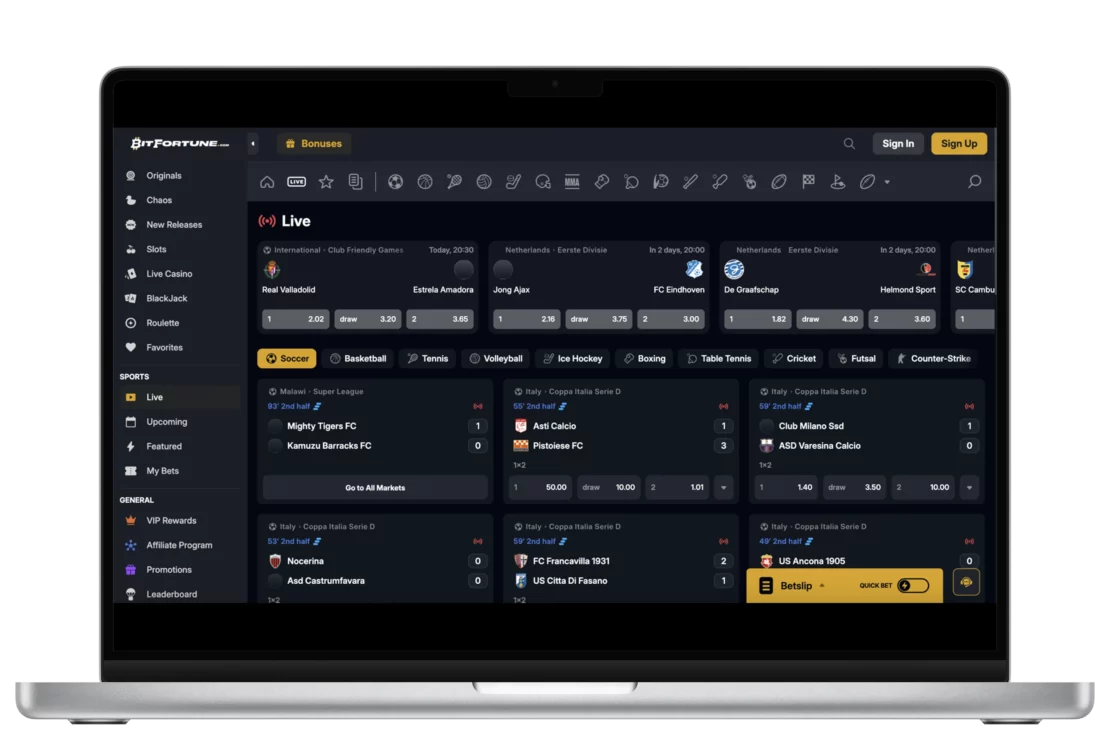
The sportsbook is typically accessible from the main navigation menu, often labeled Sports or Sportsbook. Inside, events are usually organized by sport first, then by league or tournament. Many platforms also separate pre-match and live sections because the pace and odds behavior are different.
If you already know what you want to bet on, search is usually the fastest tool. If you are browsing, filters help you narrow by start time (today, upcoming) and by format (pre-match vs live). When you open a specific event page, the most common markets are typically shown first, with additional markets grouped in expandable sections.
Popular Betting Markets
A betting market is the specific outcome you are wagering on. Understanding the most common markets covers most sportsbook use and reduces accidental selections.
Match result or winner markets focus on who wins the event. In football, this is often a three-way result that includes a draw option, while many other sports use a two-way winner format. Totals markets focus on whether the combined score goes over or under a set number. Handicaps (spreads) adjust the score on paper to balance teams, changing what is required for a selection to win. Both teams to score is common in football and is settled based on whether each team scores at least once. Team totals focus on one team’s scoring output rather than the combined total.
| Market Type | What It Means | What to Double-Check |
| Match Result / Winner | Bet on which side wins (sometimes includes draw) | Two-way vs three-way result |
| Total (Over/Under) | Combined score over/under a line | Exact line value (e.g., 2.5) |
| Handicap / Spread | Adjusted score used for settlement | Handicap number and timing rules |
| Both Teams to Score | Both teams score at least once | Regulation time vs other formats |
| Team Totals | One team over/under a line | Team name and the exact line |
Odds and Stake Basics
Odds represent the price you accept for an outcome, not a guarantee. Higher odds usually imply a lower probability but higher potential payout. A practical approach is to decide your stake plan before you start and keep stakes consistent within a session. This makes results easier to track and reduces emotional decisions after wins or losses.
Avoid increasing stakes to recover losses. Chasing losses increases risk without improving the likelihood of a win. This is especially important in live betting, where quick odds changes can push people into rushed confirmations. Use the bet slip as a checkpoint: confirm event, market label, line value (if applicable), final odds, and stake amount.
Pre-Match vs Live
Pre-match betting is placed before an event starts. The key advantage is that you have more time to compare markets and verify details. Odds can still change, but updates are usually slower than in live betting, which makes pre-match a practical choice if you want a calmer workflow.
Live betting happens after the event begins. Odds can move quickly in response to score, time, and key moments. Markets can also pause briefly after major events while prices are recalculated. If you use live betting, confirm the score and match time shown in the interface right before you confirm, because the match state affects both pricing and risk.
A useful way to choose between the two is to match them to your situation. If you cannot follow the match closely, pre-match is typically safer. If you are watching and can verify the match state continuously, live betting may be convenient—but it requires stricter discipline.
Using the Bet Slip
The bet slip is where you finalize a wager. After you select a market, the slip typically shows the event name, the market label, the odds, and the field where you enter your stake. This is the last moment to correct mistakes before money is committed.
If the platform prompts you to accept an odds change, treat it as a real decision point. Confirm only if the updated odds still match what you intend to accept. After placing a bet, use My Bets or Bet History to confirm the wager is recorded and to track settlement after the event ends.
Deposits and Withdrawals
On a crypto-first platform, deposits and withdrawals are typically managed through the wallet or cashier section. Deposits usually involve selecting a cryptocurrency, generating a deposit address, and sending funds from an external wallet. Balance updates after network confirmations, so timing can vary depending on congestion and the asset used.
Withdrawals usually involve selecting a cryptocurrency, entering a destination wallet address, confirming the amount, completing any security steps (such as email confirmation or two-factor authentication), and tracking the request in transaction history. Processing time can vary due to network conditions and internal checks.
| Transaction | What to Verify | Why It Matters |
| Deposit | Asset and network match cashier instructions | Prevents network mismatch issues |
| Deposit | Address copied exactly | Transfers are typically irreversible |
| Withdrawal | Destination address and network are correct | Avoids sending funds to the wrong route |
| Withdrawal | Security confirmation completed | Prevents delays and failed processing |
Mobile Sports Betting
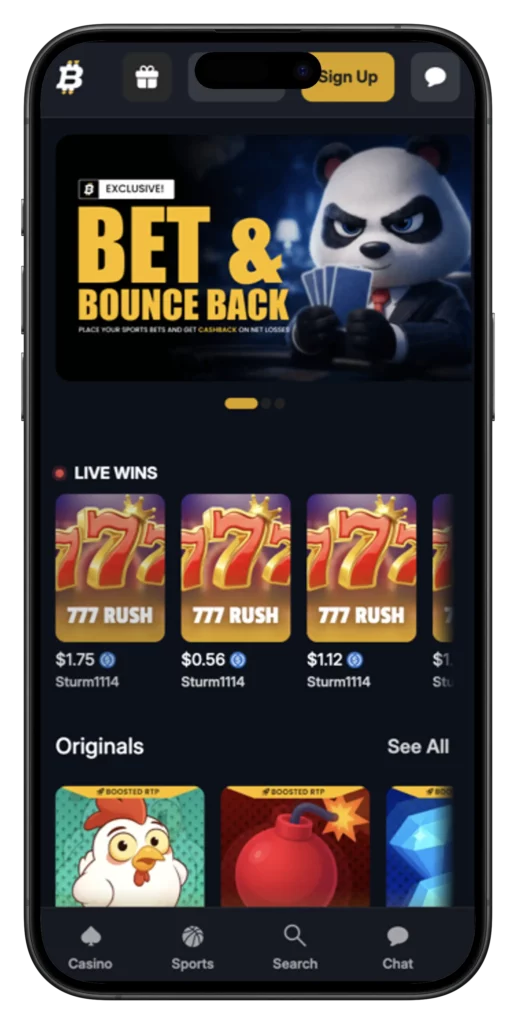
Mobile betting follows the same logic as desktop, but mis-taps and rushed confirmations are more common on small screens. Use search and filters to avoid long scrolling, open the bet slip immediately after selecting a market, and verify market label and line value before entering a stake. For live bets, confirm score and time right before you submit because odds can update quickly.
If the connection is unstable or the interface feels delayed, avoid time-sensitive live betting until the display is stable.
Responsible Approach
A responsible approach starts with limits. Decide your session budget and time cap before you begin. Keep stake sizes stable, avoid chasing losses, and take breaks if you notice you are placing bets faster than you can review them. If the platform offers limit tools, use them; if not, apply personal rules such as a daily cap and a strict stop point for the session.



Accepted networks